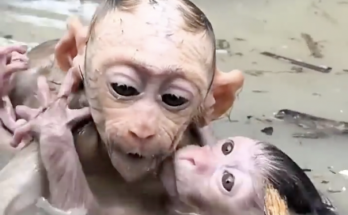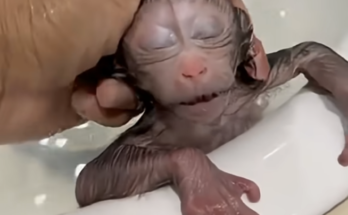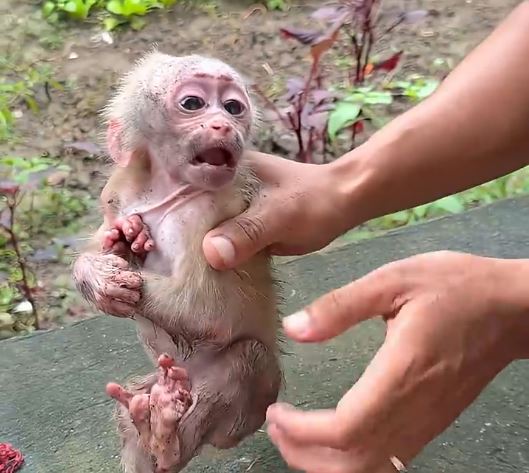
The tropical heat was heavy, but the water pouring over the tiny macaque was freezing cold. Pipi didn’t understand why the rain was coming from a plastic hose, or why the heavy, rough hands of the man kept pinning him down against the concrete.
Just days ago, Pipi had been high up in the forest canopy, tightly wrapped in the warm, safe embrace of his mother. But men with nets had shattered that world. They tore him away from her chest, ignoring her desperate screams, and brought him to a concrete compound filled with bright lights, cameras, and cages.
Now, he was entirely alone, trembling from head to toe.
🎬 “Camera, Action”
The man holding Pipi adjusted his grip, deliberately squeezing the infant’s chest just tightly enough to make him gasp.
“Cry,” the man muttered in a low voice, positioning a smartphone just inches from the monkey’s face. “Make it good.”
Pipi opened his mouth in a silent, terrified scream. His large, dark eyes scanned the empty backyard, desperately searching for his mother’s face. His tiny, wrinkled hands gripped at the air, trying to find something—anything—to hold onto. He was a wild animal experiencing total psychological collapse, but to the lens of the smartphone, he was just “content.”
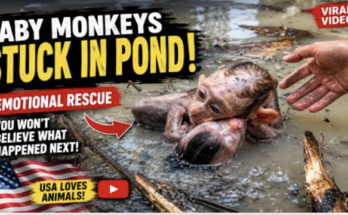
A few feet away, another man sat at a laptop, typing out titles designed to hook millions of viewers across the globe: “First Time Cleaning Poor Abandoned Baby Monkey,” and “Heartbreaking: Tiny Pipi Cries For His Missing Mother.”
💔 The Illusion of Love
Once the camera stopped recording the “rescue” scene, the cold water was turned off. Pipi was dried with a rough towel and forced into a stiff, itchy pair of denim doll overalls.
The man’s demeanor changed. He smiled widely for the next video, gently feeding Pipi a bottle of sugary milk. To the millions of people watching on their screens thousands of miles away, it looked like a beautiful act of human kindness. The comments flooded in: “Thank you for saving this sweet angel!” and “You have such a kind soul.”
But Pipi wasn’t being saved. He was a prisoner in a digital playground. Every day brought a new setup. Some days he was placed near a large snake to film his panic; other days he was left in a cage to cry for hours so the camera could capture his “grief.” Every view, share, and comment translated into advertising revenue for the men in the compound.
🌅 The Silent Fade
As the months passed, the videos of Pipi continued to generate thousands of dollars. But Pipi was growing. His soft, baby fur was giving way to the coarse coat of a juvenile macaque. His long, sharp teeth were beginning to come in, and the instinct to defend himself was growing stronger. He was no longer the tiny, helpless doll the internet loved.
One afternoon, during a filming session where the man tried to force him into a tiny toy car, Pipi turned and bit the man’s hand.
The camera cut to black.
The next day, a new, younger baby macaque was brought into the compound. The video uploaded to the channel was titled: “Meet Pipi’s New Little Brother!”
Pipi’s cage was moved to the very back of the compound, out of sight of the cameras and the world. His story on the internet had ended, leaving behind only a trail of digital footprints and a screenshot of a terrified baby monkey whose real cry for help was mistaken for entertainment.