When my wife, Sarah, and I adopted six-year-old Ava, we promised her one thing.
“You’ll never have to earn your place in this family.”
She looked at us with those cautious brown eyes that had already seen too much for a child her age.
“You mean… forever?”
Sarah smiled.
“Forever.”
For months, Ava tested that promise in little ways.
She apologized for spilling juice.
She asked permission before hugging us.
She whispered “thank you” every time we tucked her into bed.
One evening I asked why.
She shrugged.
“People leave.”
I knelt beside her.
“We’re not people who leave.”
She wrapped her arms around my neck so tightly I could barely breathe.
That was the day I truly became her dad.
Not everyone shared our joy.
My mother, Diane, insisted she was “happy for us.”
But every compliment came with a condition.
“She’s sweet… considering her background.”
“I’m sure she’ll adjust… eventually.”
“Maybe when you have children of your own, you’ll understand.”
I corrected her every time.
“Ava is our child.”
Mom would nod politely.
Then say something just as hurtful a week later.
Sarah wanted to believe she’d change.
I wasn’t so sure.
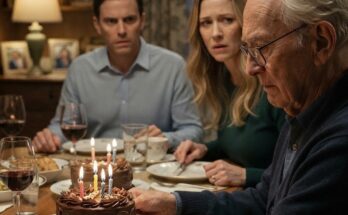
The real trouble started at Mom’s seventieth birthday.
Nearly forty relatives gathered in my parents’ backyard.
Ava had spent all morning making a handmade birthday card covered with glitter hearts.
She practiced what she wanted to say.
“Happy Birthday, Grandma. I love you.”
When it was finally her turn, she handed Mom the card with both hands.
My mother barely glanced at it.
“Thank you.”
Ava smiled.
Then my niece asked innocently,
“Grandma, where are all your grandkids going to sit for the picture?”
Mom answered without thinking.
“The real grandchildren can come first.”
Silence.
She looked directly at Ava.
“You can stand in the back with the other children.”
Ava’s smile disappeared.
“I thought…”
Mom continued.
“You aren’t actually family, sweetheart. Adoption is different.”
I heard Sarah gasp.
The backyard became so quiet that even the children stopped talking.
Ava lowered her head.
“Okay.”
That single word broke my heart.
I walked over, picked Ava up, and faced everyone.
“We’re leaving.”
Mom frowned.
“Oh, don’t be dramatic.”
I looked her in the eye.
“You just told my daughter she isn’t family.”
“I only told the truth.”
“No.”
“You revealed your opinion.”
“They’re different.”
“They’re identical.”
She laughed dismissively.
“You know what I mean.”
“I do.”
“And until you understand that Ava is my daughter—not my adopted daughter, just my daughter—we won’t be coming back.”
We left before anyone spoke another word.
That night Ava sat on the edge of her bed.
“Did I do something bad?”
“No.”
“Grandma doesn’t love me.”
I chose my next words carefully.
“Some adults make mistakes.”
“Big ones.”
“That wasn’t your mistake.”
She leaned against me.
“Can I still call you Dad?”
I blinked back tears.
“You always will.”
For three weeks we heard nothing from my parents.
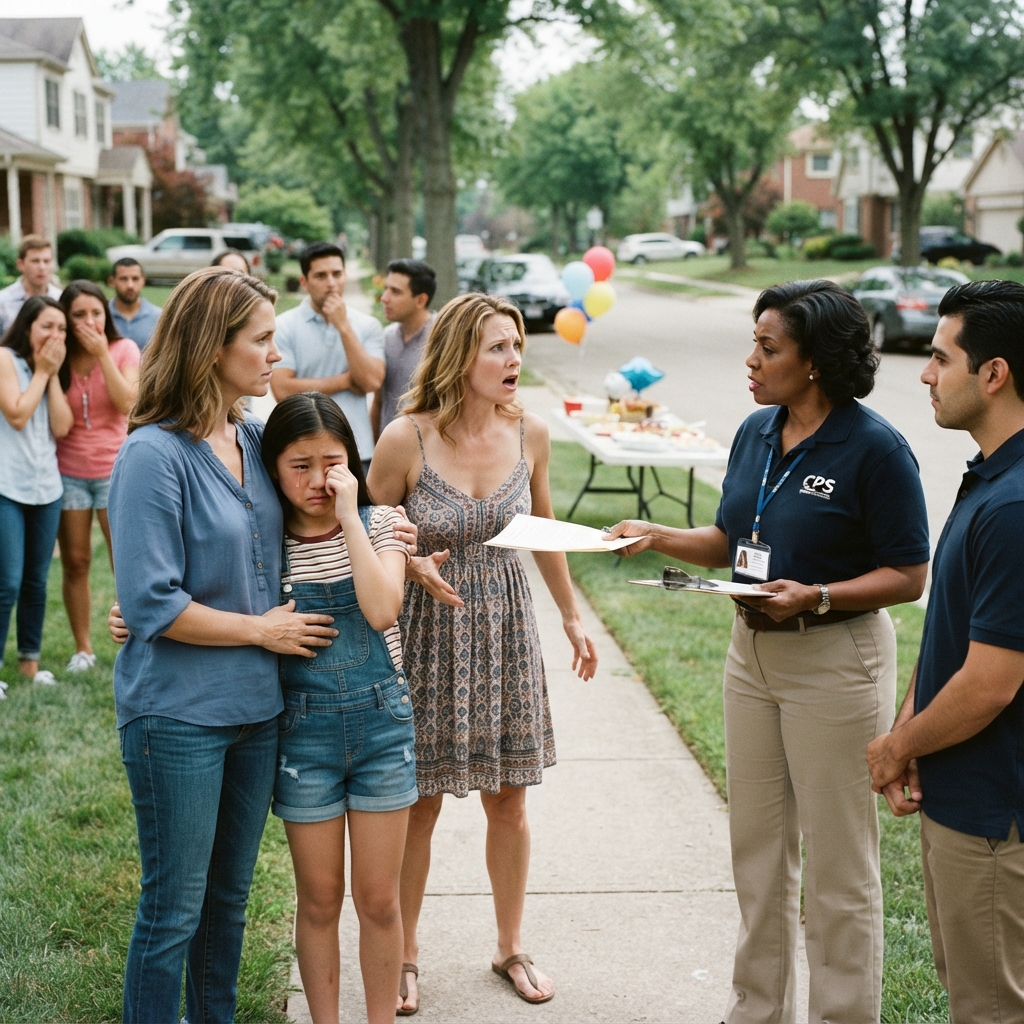
Then, one Tuesday morning, someone knocked on our front door.
Two CPS caseworkers introduced themselves.
“We received a report expressing concern about Ava’s safety.”
My stomach dropped.
The allegations were detailed.
Emotional neglect.
Unsafe living conditions.
Failure to provide food.
None of it was true.
The investigators remained calm and professional.
They explained that every report had to be assessed.
They interviewed Sarah and me separately.
They spoke gently with Ava.
They looked around the house.
They asked for medical records.
School information.
Everything.
It was exhausting.
But we cooperated completely.
Before leaving, one investigator quietly said,
“Your daughter appears safe, healthy, and deeply loved.”
Still, procedure required them to finish the investigation.
For the next two weeks, our lives felt suspended.
Even knowing we had done nothing wrong, having strangers evaluate your family is emotionally draining.
Ava sensed our stress.
She asked every day,
“Am I staying here?”
Every single day we answered,
“Yes.”
The case was eventually closed.
Unfounded.
The relief was overwhelming.
Then another surprise arrived.
One of the investigators called.
“We’re permitted to tell you only this.”
“The report appears to have come from someone with close family knowledge.”
I already knew.
I just couldn’t prove it.
A few days later, my cousin Melissa stopped by unexpectedly.
“I think you should have this.”
She handed me an old leather notebook.
“It belonged to your grandmother.”
Inside were decades of handwritten entries.
Birthdays.
Holiday expenses.
Family milestones.
Letters never mailed.
Near the back was an envelope labeled simply:
“For whichever grandchild needs this one day.”
Inside was a letter.
Grandma wrote about adoption.
About kindness.
About family.
She explained that after losing a baby decades earlier, she had seriously considered adoption herself.
She never forgot the pain.
Then came a sentence that stunned me.
Diane still believes blood is the only thing that makes a family. I pray she changes before it costs her someone she loves.
The letter was dated twenty-eight years earlier.
Melissa sighed.
“Grandma knew.”
“She tried talking to Aunt Diane for years.”
I closed the notebook.
“So nothing changed.”
Melissa shook her head.
“Until now.”
Weeks later my parents requested a meeting.
Public place.
Neutral ground.
Sarah agreed only if Ava didn’t have to come.
Mom looked older than I remembered.
“I didn’t call CPS.”
I stayed silent.
“I asked someone to ‘check on things.'”
She hesitated.
“I didn’t realize what that meant.”
My father finally spoke.
“Diane.”
She looked down.
“I thought if professionals looked into things…”
“You thought they’d decide we weren’t fit parents.”
She started crying.
“I thought maybe she’d be better with another family.”
The words hung in the air.
Sarah stood.
“This conversation is over.”
Several months passed.
No visits.
No calls.
Just quiet.
Then one afternoon a package arrived.
Inside was Ava’s birthday card.
The glitter had fallen off in places.
There was also a short handwritten note.
I was wrong.
I confused biology with belonging.
I hurt an innocent child.
I understand if forgiveness never comes.
No excuses.
No blame.
Just responsibility.
I didn’t answer immediately.
Forgiveness isn’t a deadline.
It’s a process.
Especially when children are involved.
Instead, I focused on the only thing that mattered.
Protecting Ava.
Helping her heal.
Teaching her that one person’s rejection never defines her worth.
A year later, Ava came home from school with a family tree assignment.
She frowned.
“I don’t know what to draw.”
“Why not?”
“My teacher said families start with people you’re born to.”
I smiled.
“Sometimes.”
I grabbed a blank sheet of paper.
“Let’s make a different kind of tree.”
At the roots we wrote:
Love.
Commitment.
Choice.
On the trunk we wrote:
Family.
Then Ava drew every person who had stood by her.
Sarah.
Me.
Her cousins.
Melissa.
Our neighbors.
Her teacher.
Even the social worker who had made sure she felt safe during the investigation.
When she finished, she looked at the page proudly.
“This is my family.”
“It is.”
She smiled.
“It’s really big.”
“It keeps growing.”
Two years later, my mother asked if she could meet Ava again.
Only if Ava wanted to.
We didn’t decide for her.
We asked.
She thought for a long time.
Finally she said,
“I’ll say hello.”
“But if she says I’m not family again…”
I took her hand.
“Then we leave together.”
She nodded confidently.
“I like that plan.”
Because that’s what family really is.
Not shared DNA.
Not matching last names.
Not old traditions.
Family is the people who stand beside a child, protect them when they’re vulnerable, admit when they’re wrong, and never make them question whether they belong.
The false report didn’t destroy our family.
It revealed exactly who was willing to fight for it.
And from that day forward, Ava never again wondered whether she was ours.
She simply knew.