Once, my family was my entire world.
Growing up in the small town of Willow Creek, everyone knew everyone else. My parents owned a modest construction company that built homes, repaired barns, and renovated old buildings throughout the county. It wasn’t glamorous work, but it was honest, and my father was proud of what he had built from nothing.
He expected me to continue his legacy.
For as long as I could remember, he introduced me as “the future owner of Carter Construction.”
I smiled every time he said it, but inside I felt trapped.
I loved designing buildings more than swinging hammers. While my father admired strength and endurance, I admired creativity and innovation. Instead of dreaming about running construction crews, I spent nights sketching sustainable homes and teaching myself computer-aided design.
When I earned a scholarship to study civil engineering at one of the country’s top universities, I thought my parents would celebrate.
Instead, it became the beginning of the end.
My father placed the acceptance letter on the kitchen table.
“So this is your plan?” he asked quietly.
“Yes.”
“You’d leave your family?”
“I’m not leaving forever.”
“You are choosing strangers over us.”
“No, Dad. I’m choosing my future.”
The room fell silent.
My mother stood beside the sink with tears in her eyes but said nothing.
Finally, my father folded the letter.
“If you walk away from this family business, don’t expect to come back.”
I laughed nervously.
“I’ll visit during holidays.”
“You won’t.”
“Dad—”
“You made your choice.”
His words felt impossible to believe.
I packed two bags that night.
When I reached the front door, I waited.
I thought someone would stop me.
My mother.
My brother.
Anyone.
No one did.
As the door closed behind me, I heard my father lock it.
I was twenty-one years old.
…
The first year alone was nothing like I imagined.
Movies make independence look exciting.
Reality looked different.
I rented half of a tiny apartment shared with three other students. My bedroom was barely large enough for a mattress and a desk. During winter, cold air slipped through cracks in the windows.
I worked mornings at a coffee shop.
Afternoons, I attended lectures.
Evenings, I studied until midnight.
Weekends, I delivered groceries.
Some nights I wondered whether my father had been right.
Maybe I had been selfish.
Maybe family should come before dreams.
But every time I walked into the engineering lab, every time I solved a difficult design problem, every time a professor encouraged my ideas, I remembered why I had left.
I wasn’t running away.
I was running toward something.
…
My mother secretly emailed me once every few months.
She never wrote much.
Are you healthy?
Are you eating enough?
I miss you.
Please don’t reply. Your father checks everything.
Reading those messages hurt more than silence.
She loved me.
She simply wasn’t willing to stand against him.
…
After graduation, I found work with a respected engineering firm.
The pay wasn’t extraordinary, but it was enough.
I rented my own apartment.
Bought my first reliable car.
Slowly, life became stable.
Then the recession hit.
The company laid off nearly half its employees.
Including me.
At twenty-five, I found myself unemployed with rent due in three weeks.
Fear returned.
For two months I sent hundreds of applications.
Most never received responses.
Finally, a small technology startup offered me a position helping develop software that assisted contractors with project planning.
Ironically, everything I had learned working with my father’s crews as a teenager suddenly became valuable.
I understood construction.
I understood engineering.
And I understood technology.
For the first time, all three worlds came together.
…
Five years later, our little startup had grown beyond anything we imagined.
Construction companies across several states were using our software.
The founders asked me to become Chief Operations Officer.
I accepted.
Not because of the title.
Because I remembered sleeping in freezing apartments wondering whether life would ever improve.
Success felt different when you had earned every step.
…
On my thirty-first birthday, I received a phone call from an unfamiliar number.
“Hello?”
Silence.
Then a voice I hadn’t heard in nearly ten years.
“Ryan?”
It was my younger brother, Ethan.
I nearly dropped the phone.
“Ethan?”
“Yeah.”
“How did you get my number?”
“I asked around.”
Another long silence.
“How are Mom and Dad?”
He sighed.
“That’s actually why I’m calling.”
My stomach tightened.
“What happened?”
“Dad had a stroke.”
Everything around me stopped.
Despite everything, he was still my father.
“Is he okay?”
“He survived.”
“And Mom?”
“She’s exhausted.”
I waited.
“There is something else.”
“What?”
“The construction company is failing.”
…
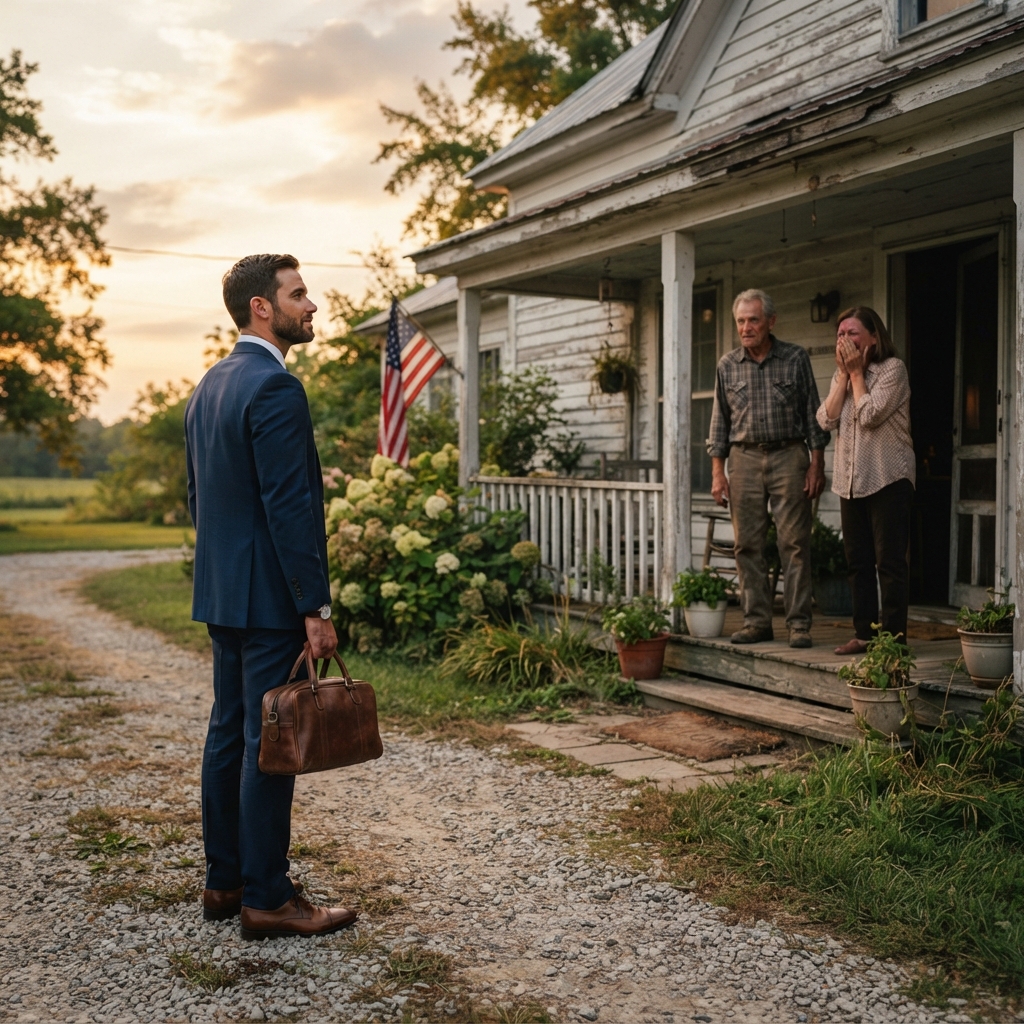
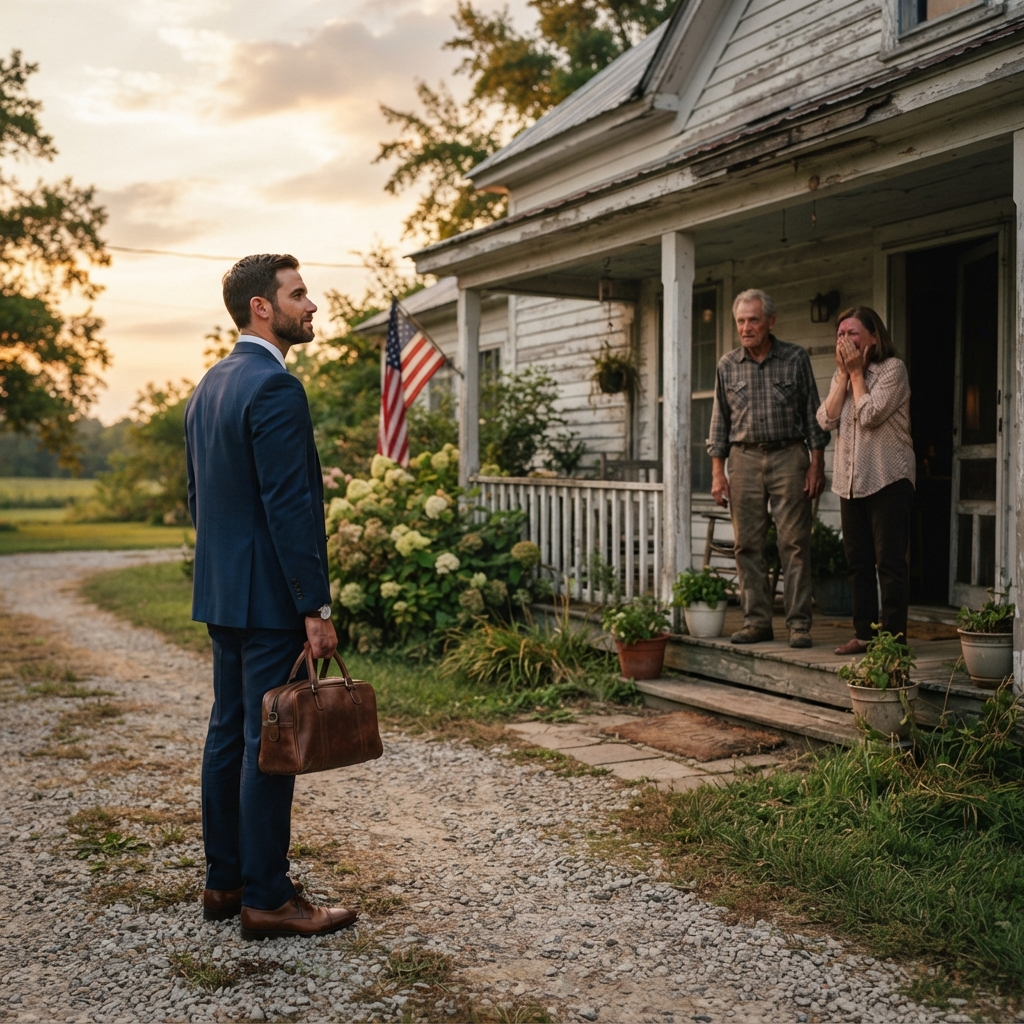
A week later, I drove back to Willow Creek.
The town looked almost identical.
The old diner still stood on Main Street.
The church bell still rang every Sunday.
The hardware store where Dad bought tools every Friday remained open.
Yet everything felt smaller than I remembered.
Maybe because I had changed.
Our family house appeared exactly as it had ten years earlier.
Only older.
The white paint had faded.
The porch leaned slightly.
The flower beds my mother once cared for were overgrown.
I stood outside for nearly five minutes before knocking.
My mother answered.
She stared.
Her hands began shaking.
“Ryan?”
I smiled.
“Hi, Mom.”
She burst into tears.
Without saying a word, she wrapped both arms around me.
For nearly a minute neither of us spoke.
Then she whispered, “I’ve waited so long.”
…
Seeing my father was harder.
The strongest man I had ever known now struggled to stand without assistance.
Age and illness had softened him.
He looked at me from his chair.
For several seconds neither of us spoke.
Finally he managed four quiet words.
“You came back.”
“I did.”
“I wasn’t sure you would.”
Neither was I.
…
That evening Ethan explained everything.
Several large contracts had fallen through.
Equipment loans had become overwhelming.
Competitors had taken most of their longtime customers.
Without significant changes, Carter Construction would close within six months.
I listened carefully.
Not because I wanted revenge.
Because I recognized every problem.
The company wasn’t failing because people worked hard.
It was failing because it hadn’t adapted.
Everything still relied on paper schedules, handwritten invoices, and outdated estimating methods.
The world had changed.
The business hadn’t.
…
The next morning I walked through the company office.
The same filing cabinets.
The same dusty desks.
The same calendar from months ago.
I couldn’t help smiling.
“It really hasn’t changed.”
Dad watched quietly.
“No.”
“I think we can save it.”
He looked surprised.
“We?”
“If you’ll let me.”
He lowered his eyes.
“I don’t deserve your help.”
Those words carried more weight than any apology.
“No,” I answered gently.
“But maybe this isn’t about deserving.”
…
Over the following months, I worked beside the employees rather than above them.
We digitized records.
Introduced scheduling software.
Created an online presence.
Improved bidding strategies.
Modernized equipment planning.
Within weeks, productivity improved.
Within months, new clients began arriving.
Longtime customers returned after hearing about the changes.
For the first time in years, the company turned a profit.
The workers celebrated with a barbecue behind the warehouse.
My father watched everyone laughing.
“I spent years believing strength meant never changing,” he admitted.
“You taught me otherwise.”
…
One evening we sat together on the front porch watching the sunset.
Something we hadn’t done since I was a teenager.
“I owe you an apology,” he said quietly.
“You don’t have to.”
“Yes, I do.”
He looked toward the fields stretching beyond our property.
“I thought loving you meant deciding your future.”
I stayed silent.
“I was afraid.”
“Of what?”
“That if you left…you’d discover you didn’t need us.”
I smiled sadly.
“I always needed my family.”
“I just needed the freedom to become myself.”
His eyes filled with tears.
“I confused obedience with love.”
For a long moment neither of us spoke.
Then he reached into his pocket.
Inside was the old house key I had returned the day I left.
“I kept it.”
He placed it in my hand.
“This has always been your home.”
I closed my fingers around the key.
For ten years I had imagined this moment.
I expected anger.
Vindication.
Even triumph.
Instead, I felt something much quieter.
Peace.
Because changing everything hadn’t meant returning richer or more successful than anyone expected.
It hadn’t meant proving my father wrong.
It had meant breaking a cycle that had hurt all of us for years.
Forgiveness did not erase the pain of being disowned.
It did not restore the birthdays, holidays, or ordinary moments we had lost.
But it allowed us to build something new instead of remaining prisoners of the past.
Over the following years, Carter Construction became known not only for quality work but also for mentoring young tradespeople and engineering students. We created scholarships for local graduates, partnered with community colleges, and offered apprenticeships to anyone willing to learn, regardless of their background.
My father insisted that every scholarship letter include one sentence:
“Never let someone else’s fear determine the size of your dreams.”
Whenever I read those words, I remembered the frightened young man who had walked away with two bags and eighty-three dollars, believing he had lost his family forever.
In the end, leaving home did not destroy my family.